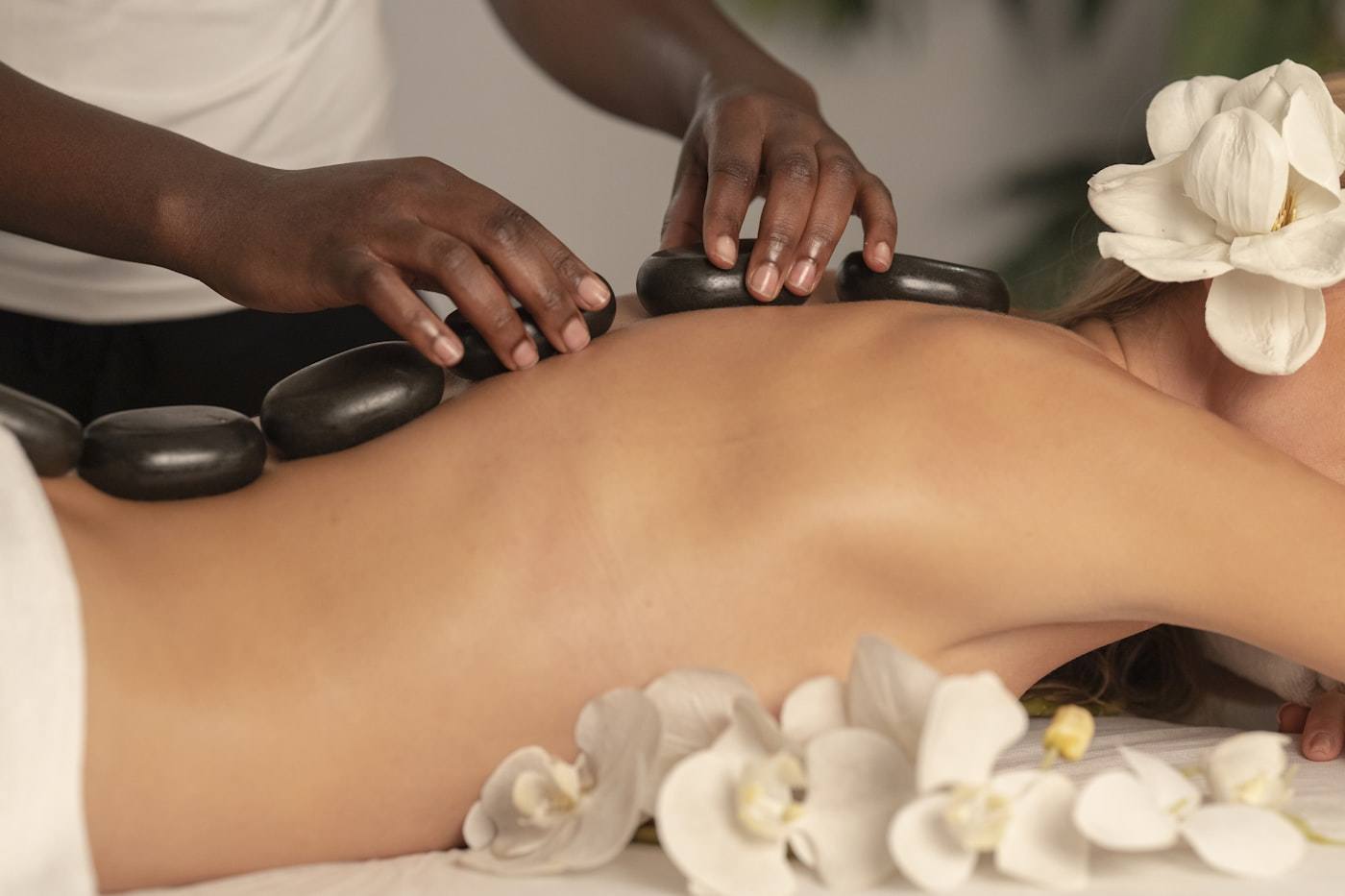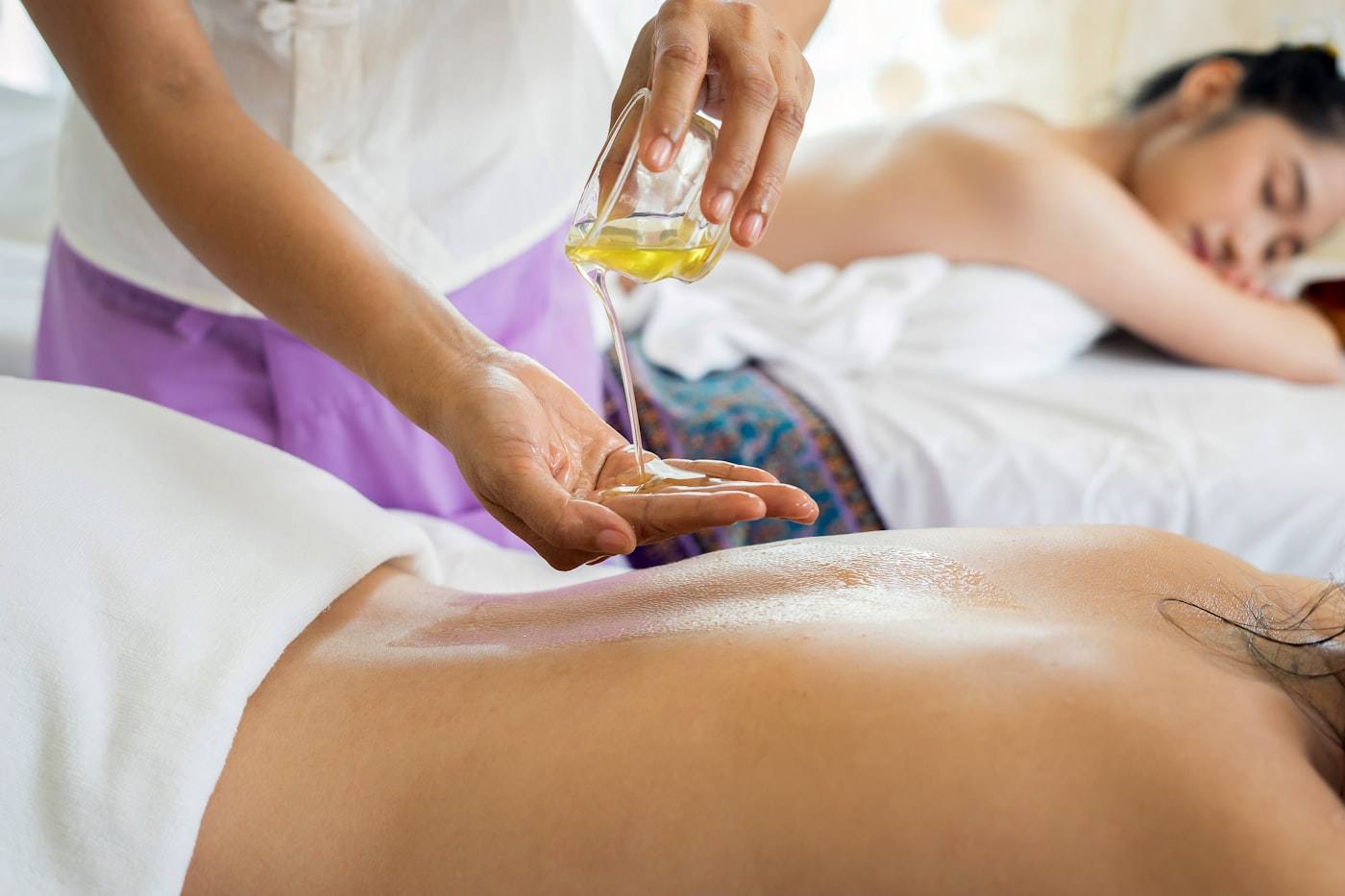
The international map on this site is not an accident of tourism. New York, London, Frankfurt, Chicago and Sydney have dense office cores. People in those cores search for Thai massage because a chair is a device for shortening the front of the body. Hip flexors tighten. The head creeps forward. The mid-back stops rotating. A traditional session is one of the few booked hours that forces those joints to travel in the other direction.
What the chair takes
Sitting is not evil. Unrelieved sitting is boring for tissue. The hip stays flexed. The breath gets shallow. By late afternoon the body has rehearsed one shape for six hours. Thai massage rehearses other shapes: a cobra that opens the front, a seated fold that lengthens the back of the legs, compression along the thighs that have been quietly clamping the chair.
Lunch hour versus evening
A fifty- or sixty-minute lunch session is the product Midtown, the City of London and Frankfurt’s banking district were built for. You will go back to the desk. That is fine. Skip the deepest assisted backbends if you have a presentation at two. Evening sessions can be more athletic because you do not have to be articulate immediately afterwards.
If your city page lists hours, believe the late closers. Shift workers and kitchen staff use the same rooms as lawyers. The craft does not belong to one job.
What to tell the therapist
“I sit. My right hip is tighter. I get tingling in the hands when I type.” That is enough. You do not need a Latin diagnosis. If you have a disc issue, a recent surgery, or a blood-clot history, you need a clinician’s clearance before a vigorous stretch session — not after.
Find a city, then a room. These guides are for curious readers, not medical advice.